We have learned not to trust the GPS estimates of travel times. In these jungle mountain roads, 60 kilometers can easily take three hours to traverse. Sudden rain, topes, large trucks, livestock, potholes, the inexplicable disappearance of a road, wrong turns, confusing signage, etc. – all add up. We got halfway to Tapachula dipping up into and down from the clouds, windshield wipers working at full speed… and we realized there was no way we’d make it to the city by nightfall.
We were under strict instructions from the Mexican border officials that we were to remain in the ‘Zona Libre‘, which constitutes La Mesilla, the highway, and Tapachula only. But we disobeyed and got off the highway and went down a dirt road into a very inexpensive hotel in a town so small it does not appear on the map.
Once the rain had dissipated, we found some tacos for dinner, and, when walking back to the motel, stopped into a shop to buy some water and munchies. Inside several men were drinking beer and smoking. Being the only outsiders in town, they wanted to know our story, so, we obliged and chatted with them for a while.
Ela was speaking with a man named Oscar, who, when I first spoke to him, was in the middle of showing Ela his hand-woven bracelet and medallion, both of which struck me as familiar designs from the northern end of Chiapas, where we had just been. He told me he was a Zapatista, and that he was in San Cristobal de las Casas in ’94.
I was skeptical, but he was emphatic, and he was about the right age. He said if we wanted to talk further he’d be happy to. Ela had a good feeling about him, and we agreed to meet him the next day at the same tienda.
So, the next day, we parked Berta on the curb in front of the store at the agreed upon time, and waited. Sure enough, after about fifteen minutes, Oscar walked up, looking fresh in his clean white button-down shirt and white ball cap. He was happy to see us, and guided us to his small ranch.
There, while he showed us around his lush little patch of paradise, he told us about this land which had been in his family for generations. Everything was grown organically, from the coffee, to the plantains, to the papayas, oranges, lemons, and lychees. Eventually we sat down with him and interviewed him about his time studying economics at the university in San Cristobal de las Casas when the Zapatistas rose up.
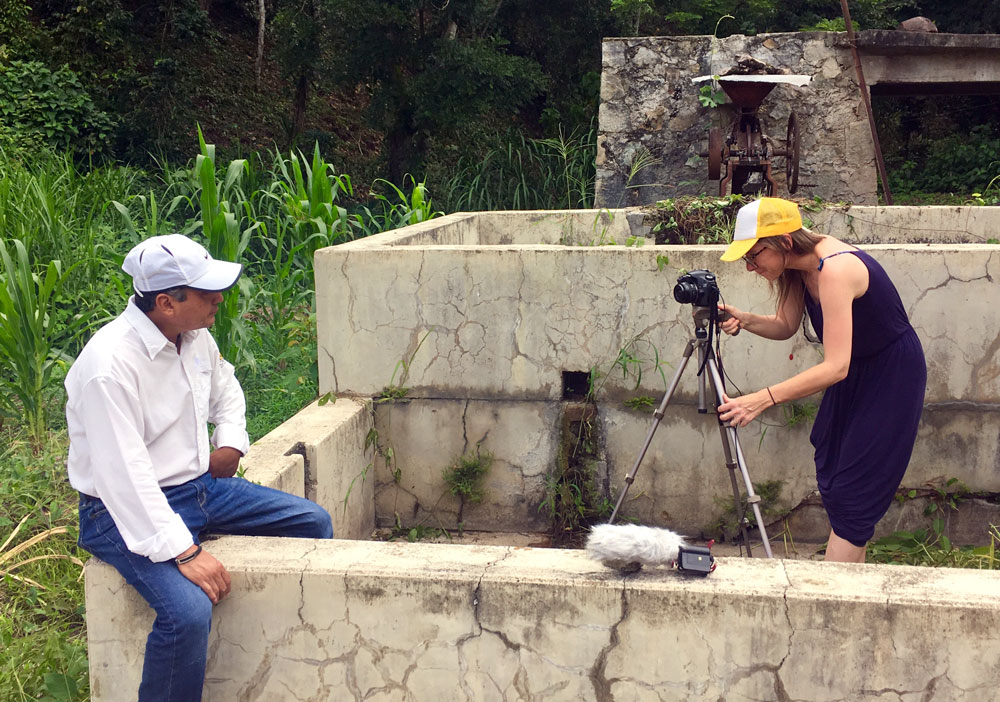
After a long interview, we had lunch, and the following day, as promised, Oscar introduced us to a friend, Florentino, who is currently an organizer of a social group connected to the Zapatistas. We interviewed him at length over lunch. After a couple of beers and some carne asada, he relaxed and really opened up. This man had been there, fighting alongside the Zapatistas, and knew subcomandante Marcos personally. He talked and talked, and wanted to give us a more in-depth education about it all the following day (Monday), but we knew we simply did not have time.
We had to get back on the road to Tapachula and try our luck again at the border. They told us to return soon. Uncertain of our chances at crossing into Guatemala, I told them it might be very soon. Like the next day.
When we got to Tapachula, our mood shifted dramatically. Heavily armed police stood in clusters amidst the throngs of people bustling through the choked, garbage-strewn streets and angry horns blared from cars gridlocked at 6pm. We were hungry, had to use the restroom, and tired from a day of winding down the mountain.
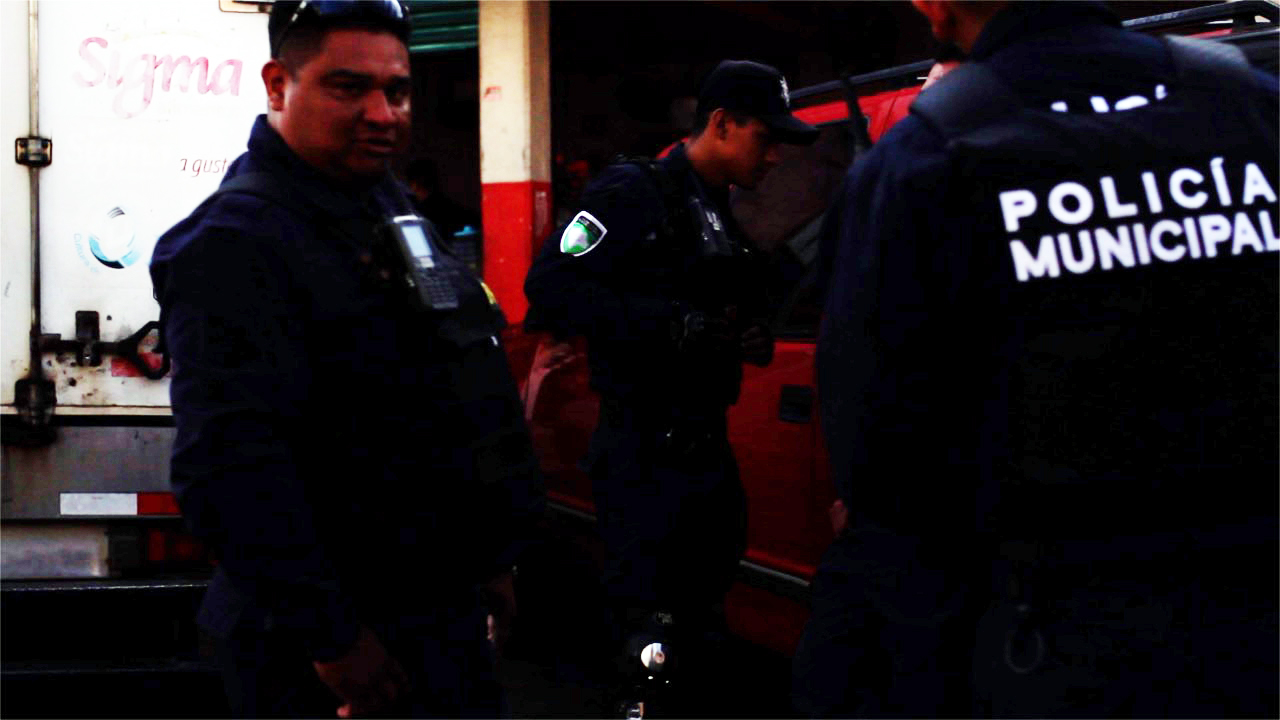
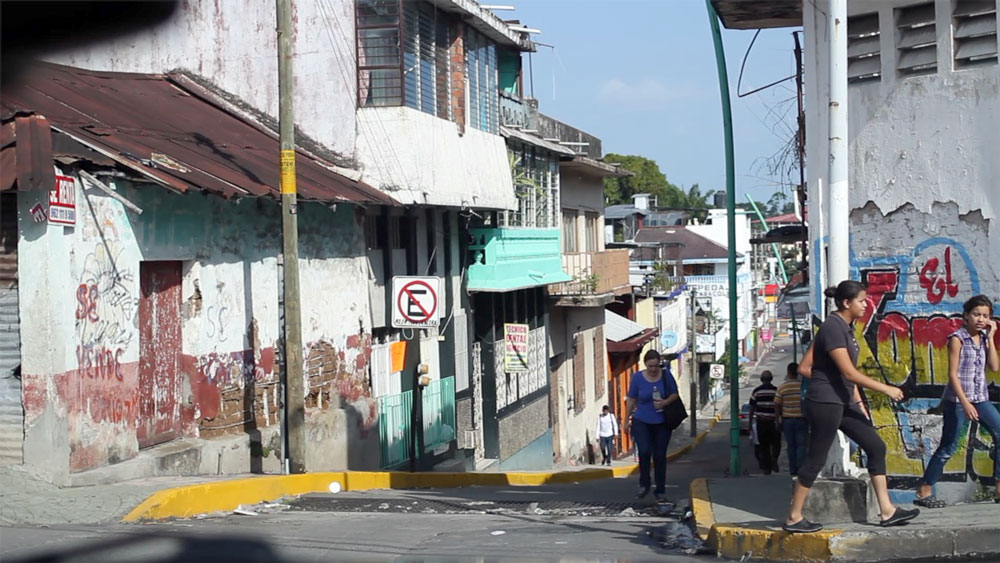
There were many dispossessed people loitering in the park. Many men sleeping drunkenly on the sidewalks. A man with his trousers down to his knees urinated in the middle of the road as he shuffled through traffic. Children hung around trash bins at the entrance to OXXO stores. Our whole reason for this journey has been to learn about this very crisis… but now we felt foolish and did not know where to start.
‘Excuse me, little girl, are you fleeing dangerous gangs and poverty in Central America?’
The sun was going down. The locked buildings began to loom down on us menacingly as we searched in vain for the migrant safe houses we had heard about. Everyone gave us conflicting and confusing directions. A semi-literate cab-driver mumbled and gesticulated directions through the gaps where his teeth used to be, and drew us a… map?
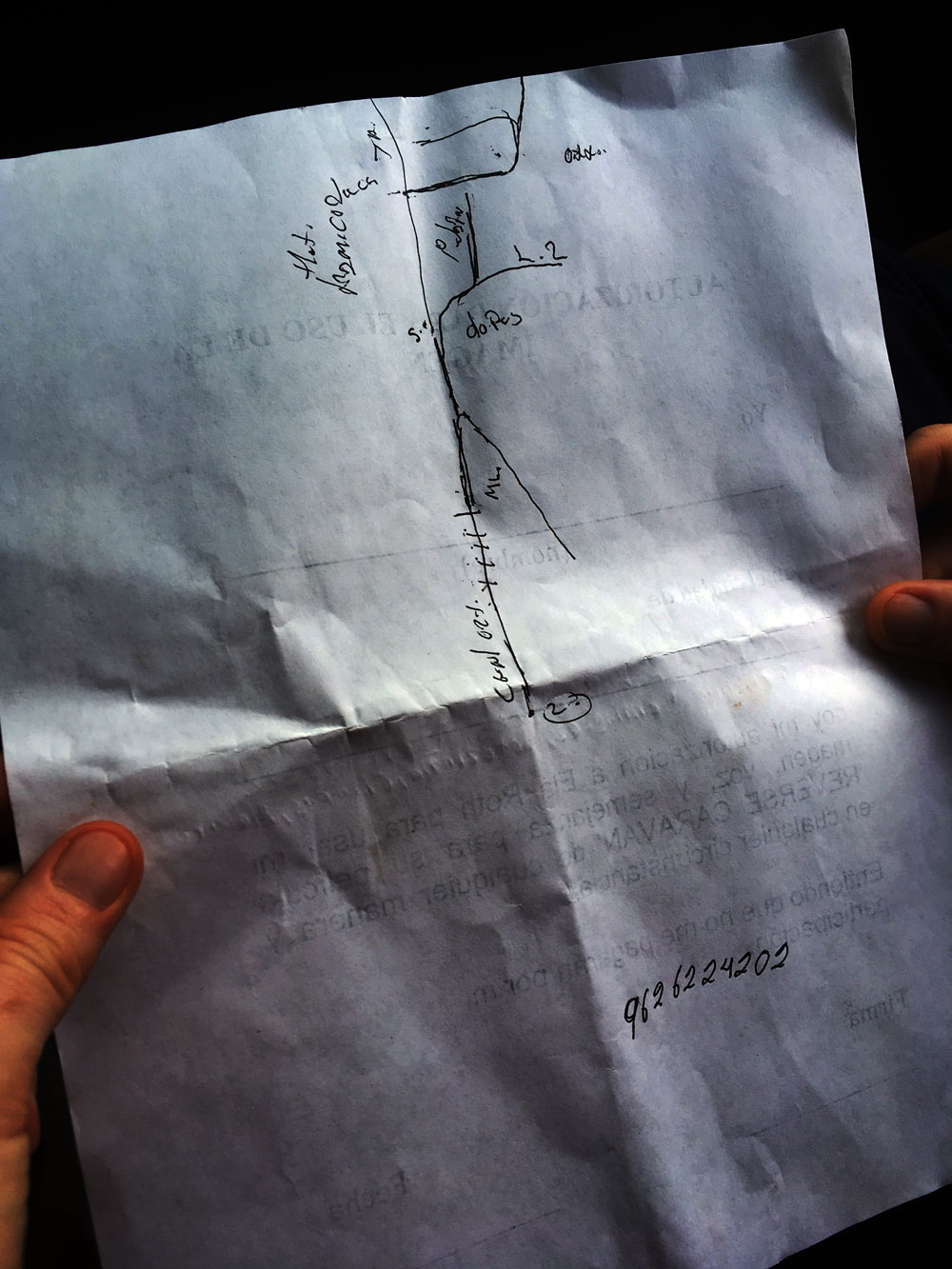
I did not want to be on these streets when the sun went down, despite or maybe because of the ubiquitously militarized police, so we shifted our focus to finding a cheap room.
A cheap room we did find. And for an inexplicable moment, we even considered staying there. It looked like a perfect location for a horror film. Wrought-iron bars, orange, dusklit rain dripping down pipes onto piles of trash, and a gruff woman behind a bullet-proof window demanding pay in cash. The room had a toilet-paper dispenser beside the bed.
We’re on a budget. I kept thinking. But when the cashier thought it was strange I wanted a key to the ‘perfectly safe’ room, and, upon my insistence, could not find one to fit the rusty lock… we changed our minds and decided to go elsewhere.
We paid a bit more and found a hotel with a locks on the doors. We put duct tape over our California license plate, and wearily plopped into the two tiny beds. I joked that it was like an episode of ‘I love Lucy’. The two beds. The joke was lost on my German wife.
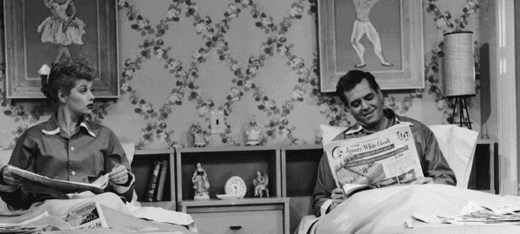
The following morning, in the already oppressive sun, we shot some more footage of the town, and finally found some accurate directions to the migrant safe house.
When we arrived, there were maybe a dozen people sitting in the shade nearby. It is an orange building with a large, secured metal door. Ela knocked softly on it. We waited. She knocked again. A guard answered. Behind him, we could see kids and a nun. He wanted to know who we were, who we were with, what we wanted. Eyed us suspiciously.
We did our best to explain ourselves, but he didn’t seem convinced, said that he would go ask inside, and closed the door. We waited. Shortly after that, a young man exited and greeted us in English.
‘What’s up guys?’
He said his name was Elvis, and he was from Honduras, staying at the house. We talked with him for a while, but he didn’t want to be interviewed. He was a seemingly good natured guy who admitted to making some mistakes when he lived in the U.S. Like selling guns. He was repentant, now, and had found God, he said. He told us that he could help us, but after a few minutes, said he had to go.
Another man, who asked to be called ‘Chico’, came up to us and greeted us in English. Chico was fiery in attitude and somewhat aggressive. Rather paranoid. He was convinced that the other migrants hated him because he was from Nicaragua, and had tried to trick and kill him. He agreed to tell us his story, but did not want us to show his face. We agreed to digitally alter his voice for the documentary as well. He was afraid that the president of Nicaragua would have him killed.
We spoke with Chico for a good while, conducting the interview in Spanish, but much of his story, albeit heartbreaking, was sullied by his grandiose conspiracy theories, victimized attitude, and incomprehensible faith in the natural goodness of the United States government. We gave him a couple of cigarettes, a bottle of water, our leftover food, and wished him luck.
The safe-house guard returned to tell us we’d have to schedule an official appointment, gave us a number, and sent us on our way.
Again for the border. I must say, my spirits were low. We did not have the documents they required last time, and so, what use was there even in trying? We had been able to get a letter from the car dealership assuring that we had, in fact, bought the car. But when the contract itself was not enough… how could this change anything? Ela reminded me that attitude was everything, and I did my best to hold my head up.
At the border, we were bombarded by men with semi-official looking shirts insisting to get into the car in order to help us get across. We refused, of course, but they kept flagging us down and whistling. It was a relentless barrage of ‘help’, that only escalated the stress of that critical place. We passed through the Mexican customs and got our exit stamps without incident.
When we arrived at the Guatemalan side, however, I saw that the woman behind the glass had a very sour look on her face, and my heart sank. While Ela battled a money-changer behind me (who was trying to trick her with the exchange rate… she wouldn’t have it, and things were getting heated), the woman told me that we did not have exit stamps on our passports from Guatemala- only entry stamps from three days prior when we had made our previous attempt. I explained to her that we never even got past customs in Guatemala, and she told me that I had to pay a fine of 100 Quetzales. I attempted again to reason with her, and suddenly the fine was 400 Quetzales. She tossed the passports back through the window and said ‘Not my problem.’
400 Quetzales was most of the cash we had left, but we really had no choice, and so, paid up.
‘We’re broke.’ Ela said. ‘I’m pretty sure that guy who changed the money stole from us.’
We got to the next phase of the process, did the mandatory car fumigation (again), and went to make copies of our passports and car documents. Unfortunately, the power was out, and the copy machines at the store were not functioning. However, some young guys were running a generator, which they were using to play arcade games. By now, my head was pounding, and I was accepting it all with the bleak humor of a character in a story written by Franz Kafka.
I went to the final customs window, handed over the ever-growing bundle of documents that proved our car is, in fact, our car, and the woman behind the window read them closely.
She pulled something up on her computer and began typing. I could see that she was translating. She said nothing for a long time, nor did she look at me. I was sweating profusely, and trying my best to appear innocent. She asked for my passport and drivers license. Then, she started filling out a form.
I looked back at Ela, who was sitting a few feet behind me, waiting. I couldn’t believe it. Was this… working? I crossed my fingers so that she could see. She smiled.
Then the woman made eye contact with me and asked me about the receipt for the fine we had paid. I had mistakenly given it over with the rest of the documents. I explained. The woman raised her eyebrows at my story and chuckled a little. Then realized… she was pitying us.
Hallelujah!
She inspected our car, told us to pay the entry fee (but no more, and not to trust all these people), and then…
We were through.
The wind whipped through the open windows and the beautiful pot-holed highway lifted us up out of the sweaty purgatory of Tapachula and the border and into the high, gloriously cool and rainy mountains of Guatemala.